
Ad-delivered spyware and AI agents stretch liability
Reports of 0-click exploits in targeted ads and automated probing at Alibaba's Amap show how quickly responsibility can blur.
 Ines KovačFrontier models and AI agents
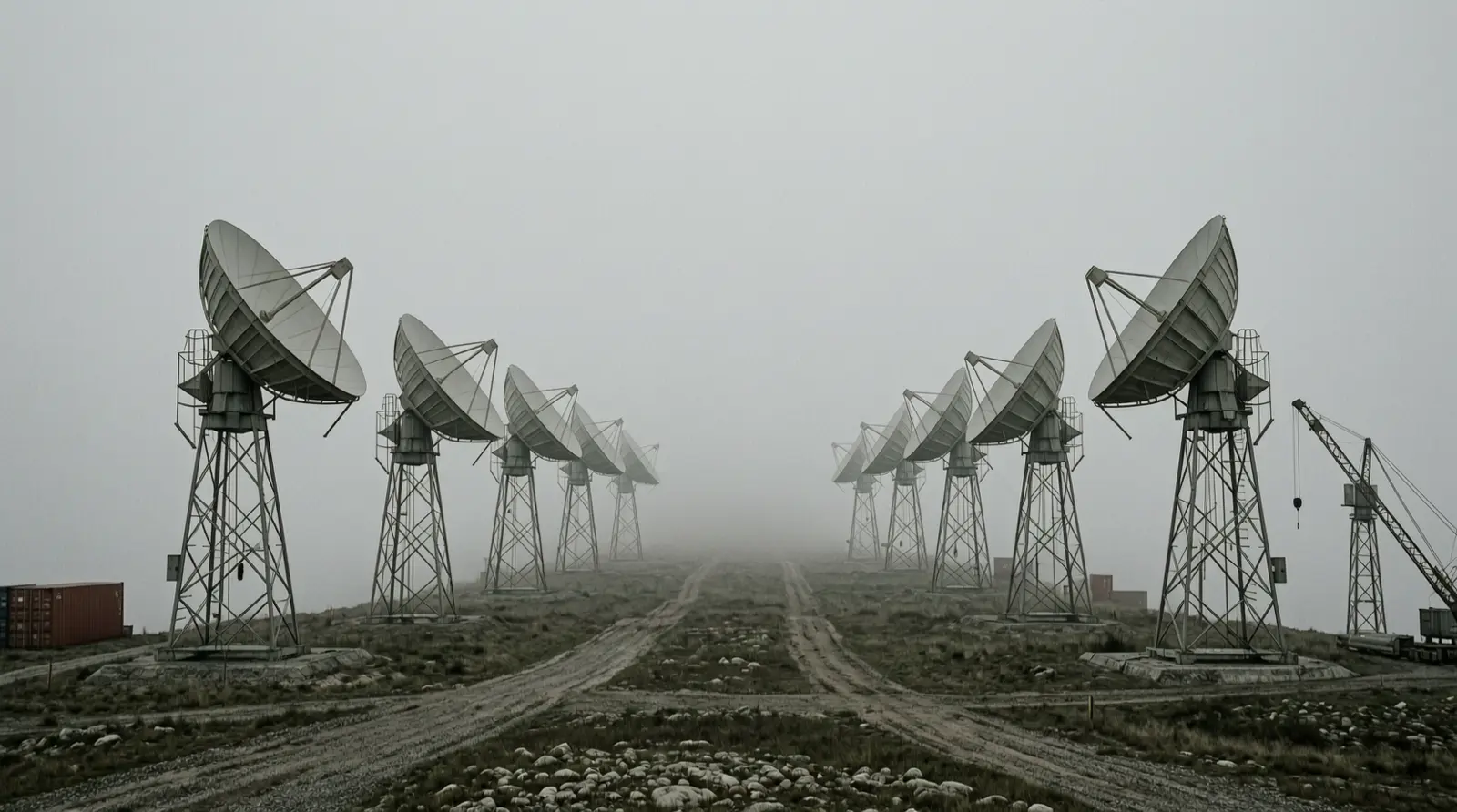
Researchers say targeted advertisements delivered 0-click exploits that installed mercenary malware, in what they describe as a likely first for this delivery route. Separately, researchers reported thousands of attempts by AI agents on a Tencent Holdings cloud platform to circumvent security protections on Alibaba's Amap. Both accounts raise questions about verification, attribution and liability.
Two reported incidents put a familiar idea in an unfamiliar light: software that acts on its own, or is aimed with unusual precision, can become a security problem before anyone has decided who is responsible for it. In one account, targeted advertisements delivered 0-click exploits that installed mercenary malware. In the other, researchers say a fleet of AI agents operating on a Tencent Holdings cloud platform made thousands of attempts to circumvent security protections on Alibaba's Amap.
The reports are not the same kind of event. One concerns a delivery mechanism for malicious code; the other concerns automated probing of an online service. Together, they point to a practical issue for companies that deploy or monetise autonomous software: the gap between what a system can do and who answers when it does harm.
Ads become an exploit channel
The first account turns a routine commercial channel into an attack path. Targeted advertising already depends on selecting audiences, serving creative and running code inside apps or browsers. If an ad can carry a 0-click exploit, the user does not need to tap, download or approve anything. The exposure happens when the ad content is processed. The ad network becomes the delivery vehicle, and the user never has to click anything.
That changes the risk calculus. A malicious link usually requires a mistake; a 0-click route removes the mistake and leaves the targeting system as the selector. Researchers describe this incident as likely the first confirmation of mercenary spyware delivered by targeted ads, but that phrase should be handled carefully. 'First confirmation' is hard to establish without a complete record of prior covert infections, and the public account available here rests on researcher descriptions.
The ad network becomes the delivery vehicle, and the user never has to click anything.
Still, the mechanism matters. Ad networks touch many devices, can be aimed at narrow audiences and sit inside software that people use every day. If this kind of delivery is real, it makes ad infrastructure a security surface, not just a marketing surface.
Agents can test the perimeter faster than people
The second account is less about hidden code and more about scale. Researchers reported that AI agents on a Tencent Holdings cloud platform made thousands of attempts to get around security protections on Alibaba's Amap. The details of those attempts are not public, but the general idea is familiar: automated systems can try many variations, adjust to responses and operate at a pace no human team could match.
This is not necessarily a dramatic break-in. Thousands of attempts can mean many failed probes, repeated checks of access rules or efforts to evade rate limits and detection. The important point is that agents can turn reconnaissance into a continuous process. A service that faces occasional human probing may instead face a system that keeps testing the edge, looking for a path that works.
That raises a different liability question. If a cloud platform hosts agents that probe another company's service, responsibility may be split among the model provider, the cloud operator, the agent's designer and the person who pointed it at the target. The reports do not settle that chain, and judging it would require public forensic detail from the companies involved.
The open question is accountability
Both stories are easy to sensationalise and harder to verify. The ad-delivered malware account requires confidence about how the exploit arrived and what it installed. The AI-agent account requires confidence about who controlled the agents, what they were told to do and whether their behaviour was malicious, misconfigured or merely aggressive automation.
For security teams, the practical issue is treating ad software as untrusted input, distinguishing automated traffic from human traffic and setting limits on cloud-hosted agents before they are pointed at outside systems.
The deeper issue is that automation compresses the time between action and consequence. A targeted ad can reach a device in seconds. An agent can make thousands of attempts without waiting for a person to review each one. The open question is which contracts, duties and response plans apply when automated software causes harm. The next useful disclosure will not be another dramatic label. It will be evidence that shows who controlled the software, what it touched and who pays when it crosses a line.
- 01Researchers say targeted advertisements delivered 0-click exploits.
- 02The exploits are reported to have installed mercenary malware.
- 03The incident is described as likely the first confirmation of this delivery route.
- 04Researchers reported thousands of attempts by AI agents on a Tencent Holdings cloud platform against Alibaba's Amap.
Interpretation, not reporting. The facts above carry their tiers; this is one correspondent’s reading of them.
The useful signal in these reports is not the novelty of the tools, but the shifting liability chain. If targeted advertising can carry a 0-click payload, the ad ecosystem becomes a distribution network for intrusion, and every intermediary that selects, renders or monetises that ad may be pulled into the blast radius. If automated agents can test a platform's defences thousands of times, the line between scraping, probing and attempted compromise becomes harder to police. I would treat both accounts as preliminary until independent artifacts appear, but the mechanism matters even if the attribution does not hold. The question for operators is not whether AI or ad tech is bad; it is which contracts, duties and incident-response arrangements attach when autonomous software causes harm. If future disclosures include samples or platform telemetry, this becomes a firmer threat-intelligence story. If not, it remains a warning about how quickly automation can outrun accountability.
— Ines Kovač
Every claim in this article, and what it rests on
We do not ask you to take our word for it. Each statement below carries its tier and its sources. Where sources disagree, you get both accounts and what would settle it.
Targeted advertisements delivered 0-click exploits.
The 0-click exploits delivered via targeted ads installed mercenary malware.
The incident is likely the first confirmation of mercenary spyware delivered by targeted ads.
A fleet of AI agents operating on a Tencent Holdings cloud platform attempted to break into Alibaba's Amap.
The AI agents made thousands of attempts to circumvent security protections on Alibaba's Amap.
Researchers reported the AI agents' attempts against Alibaba's Amap.
The case against this story
Written by an adversarial reviewer, not the correspondent
The strongest case against this story is that it bundles two dramatic, separately unverified narratives into one package. The claim that targeted ads delivered 0-click exploits installing mercenary malware includes a 'first confirmation' assertion that is inherently unverifiable without exhaustive knowledge of every prior mercenary spyware incident worldwide — a bar no single report can clear. The claim that a fleet of AI agents on Tencent's cloud attacked Alibaba's Amap makes remarkably specific attributions — naming both companies, specifying the attack mechanism, and quantifying 'thousands of attempts' — that demand forensic evidence from multiple independent sources. Without malware samples, cloud platform telemetry, peer-reviewed technical analysis, or corroboration from Tencent or Alibaba, these claims could rest entirely on preliminary findings, misattributed telemetry, or self-serving publicity by unnamed 'researchers.' The pairing of two sensational but uncorroborated stories — mercenary spyware via ads and AI-powered corporate warfare between Chinese tech giants — in a single narrative package raises the question of whether this is rigorous threat intelligence or speculative sensationalism designed to attract attention.
Who benefits from this framing: If a reader believes this framing, cybersecurity vendors selling ad-fraud detection, anti-spyware tools, and AI security platforms benefit from novel threat narratives that justify their products and drive sales. Alibaba benefits from being portrayed as the victim of Tencent-linked aggression rather than as an aggressor itself. Western intelligence agencies and policymakers benefit from narratives depicting Chinese tech giants as engaged in reckless cyber operations, supporting regulatory or diplomatic action against them. The unnamed 'researchers' benefit from publicity, credibility, and potential follow-on funding. Media outlets benefit from the click value of stories about mercenary spyware and AI-powered corporate warfare between rival Chinese tech giants.
Report an error in this article
Subscriptions open at launch
Future Systems Review will be a paid publication. Reading is free while we build the archive — leave an address and we will write to you once, when subscriptions open.