
AI buildout meets power politics in Croatia and Inner Mongolia
Power demand, public acceptance and state-backed compute capacity are becoming binding constraints for AI infrastructure investors.
 Rafael ImaiCompute, chips and power
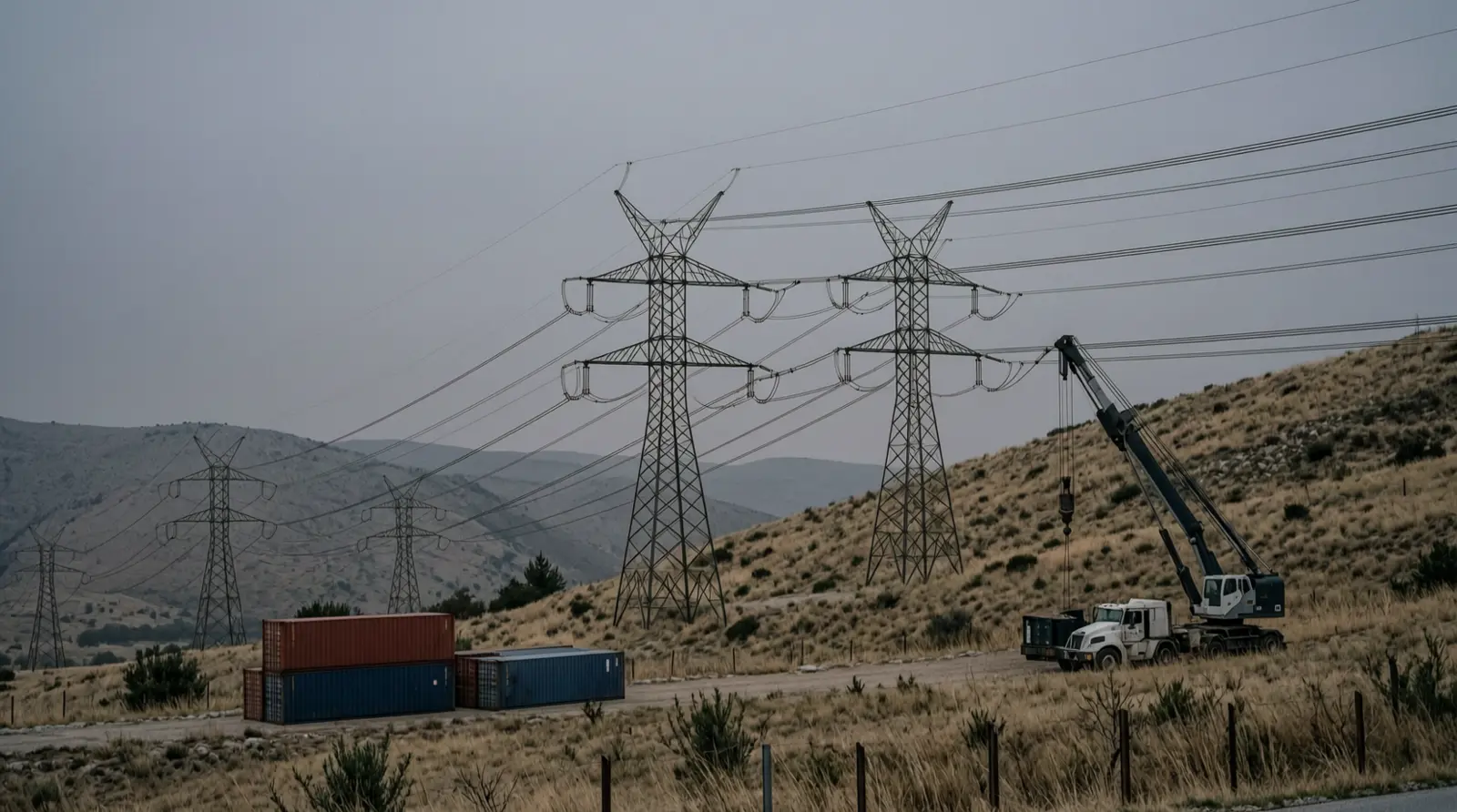
AI data-center expansion is advancing in China and Croatia, but the evidence behind its scale and cost impact remains thin. A reported Topusko project may use a quarter of Croatia's electricity, while a corporate executive says household prices will not rise. Economic indicators attached to the story lack public methodology, leaving investors to separate capacity claims from verifiable demand.
In Topusko, a Croatian town, a proposed AI data center is being described as consuming electricity equivalent to a quarter of Croatia's consumption. Index.hr reports that figure, not a disclosed grid operator or energy regulator. That turns the project from a local development into a national power question.
If the load estimate is roughly right, the facility would need transmission upgrades, firm generation or power purchases, and a clear answer to who pays. The most consequential number is not the capacity claim but the electricity share.
One report, one promise
Index.hr also reports that the head of Pantheon said electricity prices for citizens will not rise because of the Topusko AI data center. A corporate reassurance is not the same as a tariff filing. A project large enough to be measured against national consumption should have a grid study, a connection contract and a cost allocation.
Without those documents, the promise could reflect a separate supply contract, state support or optimism, because large new loads usually affect scarcity prices, network charges or investment needs.
The most consequential number is not the capacity claim but the electricity share.
Numbers without a method
The public argument for AI infrastructure is louder than its engineering paperwork. Townhall published a column arguing that AI and data centers should be embraced rather than paused. That shows one strand of political sentiment, but it does not show whether grids can carry the load.
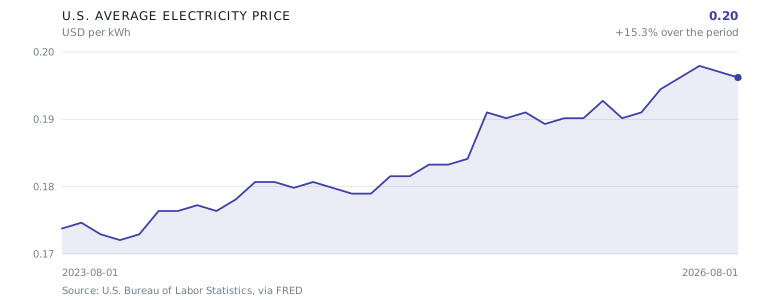
Three economic readings are attached to the story. The ELEC_PRICE instrument recorded a value of 0.196 on 1 August 2026. The SEMI_PPI instrument recorded 28.472 on the same date. The INFO_SECTOR_EMP instrument recorded 2739 on 1 September 2026. Those values may matter, but they arrive without a dataset citation, unit definition or methodology. An electricity-price figure could be euros per kilowatt-hour, dollars per megawatt-hour or an index level.
For investors, the useful test is not the presence of numbers but their provenance. Capacity announcements are easy to publish; interconnection queues and tariff filings are harder to fake.
China's compute push, same physics
China Mobile is reported to have tripled the capacity of its largest intelligent computing hub, with the expanded facility located in northern Inner Mongolia. If correct, that fits a familiar pattern: compute is moving toward land, cooling and power resources rather than sitting beside every user.
Inner Mongolia raises the same questions as Topusko. A larger hub needs transformers, switchgear, cooling, water, transmission and staff. It also needs a power balance that can survive seasonal peaks. Compute capacity can be announced in months; grids are built in years.
Until primary documents surface, the Topusko project should be treated as a political and energy story with an unverified load estimate. If one facility can equal a quarter of national consumption, the constraint is no longer chips. It is the grid.
- 01Index.hr reports the Topusko AI data center may consume electricity equal to one quarter of Croatia's consumption.
- 02Index.hr reports the head of Pantheon said electricity prices for citizens will not rise because of the project.
- 03Townhall published a column arguing AI and data centers should be embraced rather than paused.
- 04ELEC_PRICE recorded 0.196 on 1 August 2026, SEMI_PPI recorded 28.472, and INFO_SECTOR_EMP recorded 2739 on 1 September 2026.
- 05China Mobile is reported to have tripled its largest intelligent computing hub in northern Inner Mongolia.
Interpretation, not reporting. The facts above carry their tiers; this is one correspondent’s reading of them.
I would treat the Topusko story as a stress test for AI infrastructure diligence. The striking claim is not that another data center is being proposed, but that its load is described as equal to a quarter of Croatia's electricity consumption. That should trigger grid studies, tariff filings and power contracts, not a corporate promise that household prices will stay flat. I also discount the attached economic readings until someone discloses units and methodology; a value of 0.196 for ELEC_PRICE or 28.472 for SEMI_PPI is not evidence by itself. The China Mobile report points in the same direction: compute capacity can expand quickly, but transmission, cooling and seasonal power balances move slowly. My working assumption is that power availability and public acceptance will decide which projects survive, not announcements. If primary documents show firm supply and a clear cost allocation, the Croatia project becomes plausible. If they do not, the quarter-of-consumption figure should be treated as a headline, not a forecast.
— Rafael Imai
Every claim in this article, and what it rests on
We do not ask you to take our word for it. Each statement below carries its tier and its sources. Where sources disagree, you get both accounts and what would settle it.
Townhall published a column arguing that AI and data centers should be embraced rather than paused.
The ELEC_PRICE instrument recorded a value of 0.196 for 2026-08-01.
The SEMI_PPI instrument recorded a value of 28.472 for 2026-08-01.
The INFO_SECTOR_EMP instrument recorded a value of 2739 for 2026-09-01.
Index.hr reports that the AI data center in Topusko will consume electricity equivalent to one quarter of Croatia's consumption.
Index.hr reports that the head of Pantheon said electricity prices for citizens will not rise because of the Topusko AI data center.
China Mobile tripled the capacity of its largest intelligent computing hub.
The expanded China Mobile computing hub is located in northern Inner Mongolia.
The case against this story
Written by an adversarial reviewer, not the correspondent
The story assembles a mosaic that normalizes massive AI infrastructure buildout while systematically understating risk. On the expansion side, it cites China Mobile tripling capacity (itself only Tier C) and a Croatian data center allegedly consuming a quarter of national electricity — an extraordinary figure resting on a single news report with no disclosed engineering study. On the reassurance side, it foregrounds a corporate executive's self-serving promise that household electricity prices will not rise, an opinion column from Townhall (a partisan commentary site) arguing AI should be 'embraced,' and three precise economic instrument values that appear with no dataset citation, unit definition, or methodology. The overall effect is to present AI infrastructure expansion as large, inevitable, and economically benign, while the evidence for each of those three properties is respectively under-sourced, self-interested, or uncited. A reader cannot independently verify any of the numeric claims, and the one quantitative claim that is most alarming (one quarter of Croatia's electricity) is sourced only to a news headline rather than to a grid operator or energy regulator.
Who benefits from this framing: Three categories of actor benefit. First, AI infrastructure companies — Pantheon (which gets its 'no price impact' message amplified) and China Mobile (whose capacity expansion is presented as a milestone rather than scrutinized for energy or geopolitical implications). Second, pro-AI acceleration advocates, who gain from the Townhall column being elevated to evidence-tier status and from the absence of any counter-argument column in the claim set. Third, whoever supplied the three instrument values (ELEC_PRICE, SEMI_PPI, INFO_SECTOR_EMP), because presenting uncited numbers at the highest confidence tier lends a veneer of quantitative rigor to the narrative without exposing the underlying data to scrutiny. Readers who accept this framing are primed to view AI buildout as too large to question and too economically beneficial to pause.
Report an error in this article
Subscriptions open at launch
Future Systems Review will be a paid publication. Reading is free while we build the archive — leave an address and we will write to you once, when subscriptions open.