
Croatia’s near-€1bn AI pledge meets procurement reality
Public money for sovereign models and e-government assistants is becoming a test of whether Balkan AI announcements turn into contracts.
 Magnus EbbesenEnterprise adoption and technology policy
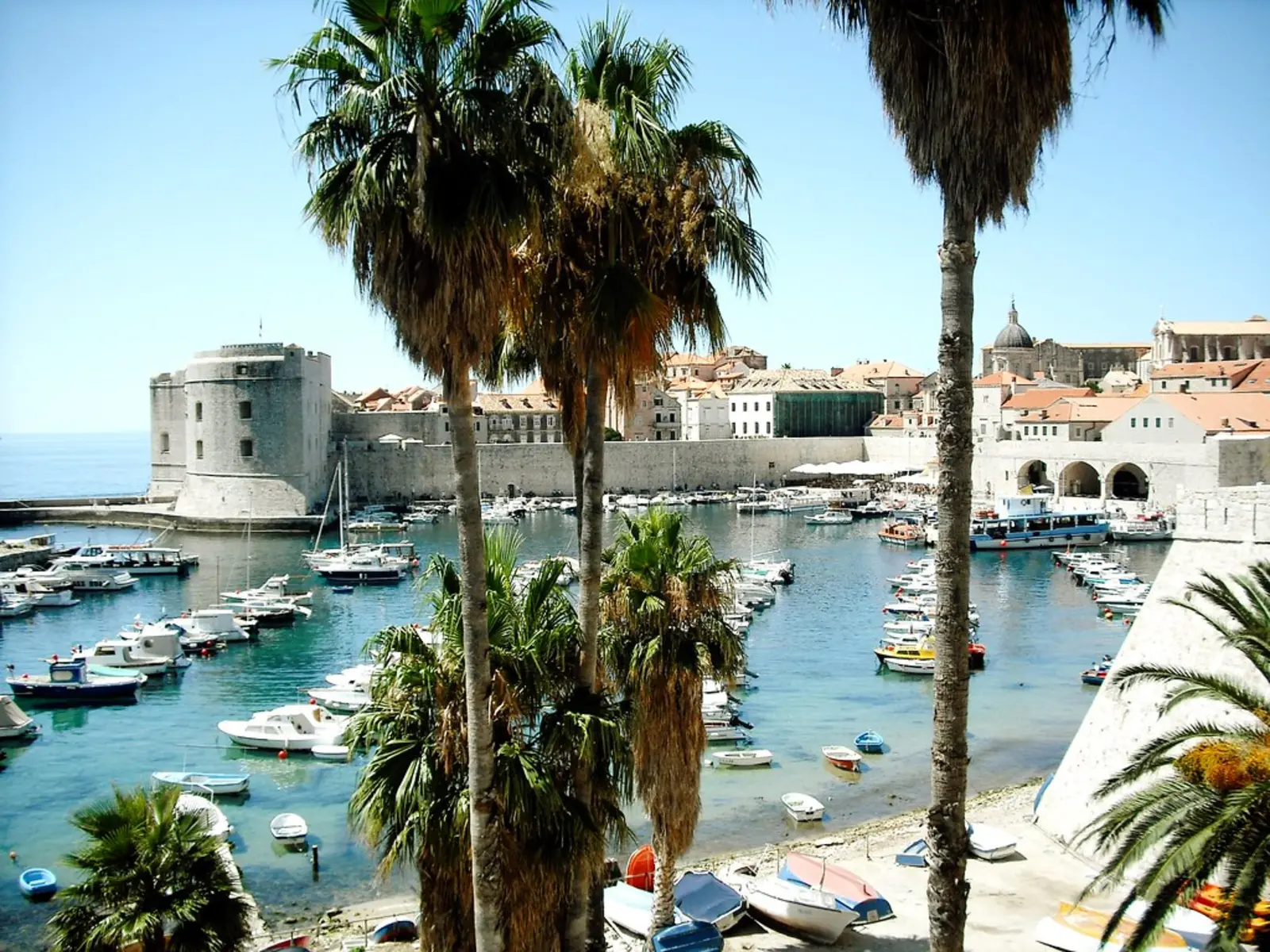
Croatia is reported to be allocating almost €1bn to AI and planning a Croatian-language model described as a Croatian ChatGPT. Turkey’s updated startup map is reported to count more than 500 AI companies, North is reported to have raised $60m, and Kosovo’s AI roadmap is expected to be approved in the Berlin Process. The region’s AI story now rests on whether policy labels become budget lines, tenders and deployed systems.
Almost €1bn is not a rounding error in Zagreb. It is the kind of figure that turns AI policy from a conference theme into procurement: model work, cloud capacity, integration, support contracts and a public owner. If the money is real and dedicated, it creates a market where none existed before. If it is a label on a wider digital programme, the story is smaller but still useful: it tells vendors where the state wants to spend.
Two outlets, 24sata.hr and telegrafi.com, report Croatia is allocating almost €1bn to artificial intelligence. The number is large enough that two readings matter. One is a dedicated AI envelope; the other is a broader digital-transformation budget with AI inside. The reports do not yet show a line item, a tender calendar or a delivery agency.
24sata.hr and index.hr describe the government’s planned Croatian-language model as a Croatian ChatGPT. The plan is also said to put AI inside e-Građani, the state’s e-Citizens portal. That is where the mechanism becomes concrete. A model attached to citizen services creates a buyer, a data boundary, a support chain and an operational owner. It also creates a test: did a public workflow change, and did the state keep it running?
A $60m round can build a company; a near-€1bn public programme can build a customer base.

Zagreb’s label needs a budget line
A "Croatian ChatGPT" is a useful political phrase, not a technical specification. It does not say whether the state will build, adapt or buy. Those choices determine who gets paid, how fast a system can be fielded, and who is responsible when a citizen-facing answer is wrong. They also determine whether local companies can compete or whether the work flows to large model providers with existing infrastructure.
The Croatian figure also dwarfs the $60m that North, a cloud and AI cost-management startup, is reported to have received. A $60m round can build a company; a near-€1bn public programme can build a customer base. The difference matters because public procurement can create recurring demand, while venture funding still requires the startup to find buyers on its own.
Turkey counts startups, Kosovo moves a roadmap
Turkey’s AI startup map is said to have been updated, with the number of AI startups put above 500. More than 500 companies is a field, while North’s $60m round is a single point of capital. That is a supply-side fact, not a demand-side one. It does not show revenue, exports or state contracts. But a map is still a policy instrument: once a government can see the field, it can frame tenders, set local requirements and steer pilots toward named companies.
Kosovo is reported to have accepted an AI roadmap that is expected to be approved in the Berlin Process. This is earlier-stage money than Croatia’s plan, if money is the right word at all. A roadmap can unlock technical assistance, donor projects and cross-border alignment, but it does not by itself pay for compute, data cleaning or public-sector deployment.
The money has to change a workflow
For founders and investors, the region’s AI programmes become interesting only when they survive the pilot stage. A sovereign model is not a product until a ministry uses it in a live service. An e-government assistant is not a market until the state pays for maintenance, monitoring and language updates. A startup map is not demand until a public agency issues a contract against it.
The strongest signal will be boring. It will be a budget code, a procurement notice, a contract award and a service metric. Until then, the region has a promising set of labels: Croatia’s near-€1bn ambition, Turkey’s 500-startup map, North’s $60m round and Kosovo’s roadmap. The open question is whether Zagreb turns the first label into traceable money and a working e-Građani service.
- 01Croatia is reported to allocate almost €1bn to artificial intelligence.
- 0224sata.hr and index.hr describe a planned Croatian-language model as a Croatian ChatGPT.
- 03Croatia’s plan is said to include AI in e-Građani services.
- 04Turkey’s updated startup map puts AI startups above 500, and North is reported to have received $60m.
- 05Kosovo’s AI roadmap is reported accepted and expected to be approved in the Berlin Process.
Interpretation, not reporting. The facts above carry their tiers; this is one correspondent’s reading of them.
The real test of this regional AI wave is not the Croatian headline number; it is whether the number becomes traceable spending. I would treat almost €1bn as a policy signal until it is tied to something the public can verify. The "Croatian ChatGPT" label is thinner still: it names an ambition, not a delivery path. Turkey’s count of more than 500 AI startups and North’s $60m round are signs of private supply, but they do not prove public demand. Kosovo’s roadmap is earlier still. If Croatia attaches the money to e-Građani and shows the work, the region will have a procurement template. If not, the story stays aspirational. The difference is between political language and the machinery of state purchasing, and the region’s credibility depends on the second.
— Magnus Ebbesen
Every claim in this article, and what it rests on
We do not ask you to take our word for it. Each statement below carries its tier and its sources. Where sources disagree, you get both accounts and what would settle it.
Croatia is allocating almost €1 billion to artificial intelligence.
The Croatian government plans to develop a Croatian-language AI model, described as a Croatian ChatGPT.
Croatia plans to introduce AI into its e-Građani (e-Citizens) services.
Turkey's AI startup map has been updated.
The number of AI startups in Turkey exceeded 500.
North, a cloud and AI cost-management startup, received $60 million in investment.
Kosovo accepted an AI roadmap that is expected to be approved in the Berlin Process.
The case against this story
Written by an adversarial reviewer, not the correspondent
The story's centerpiece — that Croatia is allocating almost €1 billion to AI — is a figure so large for a country of Croatia's economic size that it demands extraordinary documentation. If the actual figure is a multi-year digital transformation budget that merely includes AI components, or a proposal that has not been legislatively approved, the narrative of a regional AI spending surge collapses. The 'Croatian ChatGPT' claim compounds this by attaching a dramatic label to what may be a modest government project — fine-tuning an existing model on Croatian text is not building a ChatGPT competitor. The remaining items — Turkey updating its startup map, a single startup raising $60 million, and Kosovo accepting a roadmap 'expected to be approved' — are incremental developments that do not, on their own, support a picture of transformative regional AI investment. Taken together, the story amplifies aspirational policy announcements into accomplished facts.
Who benefits from this framing: Government officials in Croatia and the wider region who want to appear digitally progressive benefit from headlines about billion-euro AI allocations and national ChatGPT projects, as these create political credit without requiring immediate delivery. AI vendors, system integrators, and consulting firms benefit because inflated investment figures normalize large procurement expectations and justify fast-tracked contracts. Regional tech industry advocates and conference organizers benefit from a narrative of Balkan AI momentum that attracts investor attention and participation. If readers believe Croatia is spending €1 billion on AI, it also creates benchmark pressure on neighboring governments to announce comparable figures, benefiting anyone selling AI solutions across the region.
Report an error in this article
Subscriptions open at launch
Future Systems Review will be a paid publication. Reading is free while we build the archive — leave an address and we will write to you once, when subscriptions open.