
Hong Kong’s embodied-AI hub opens, but research ties are loose
A new hub is real, but the papers circulating around it do not yet prove an ecosystem.
 Ines KovačFrontier models and AI agents
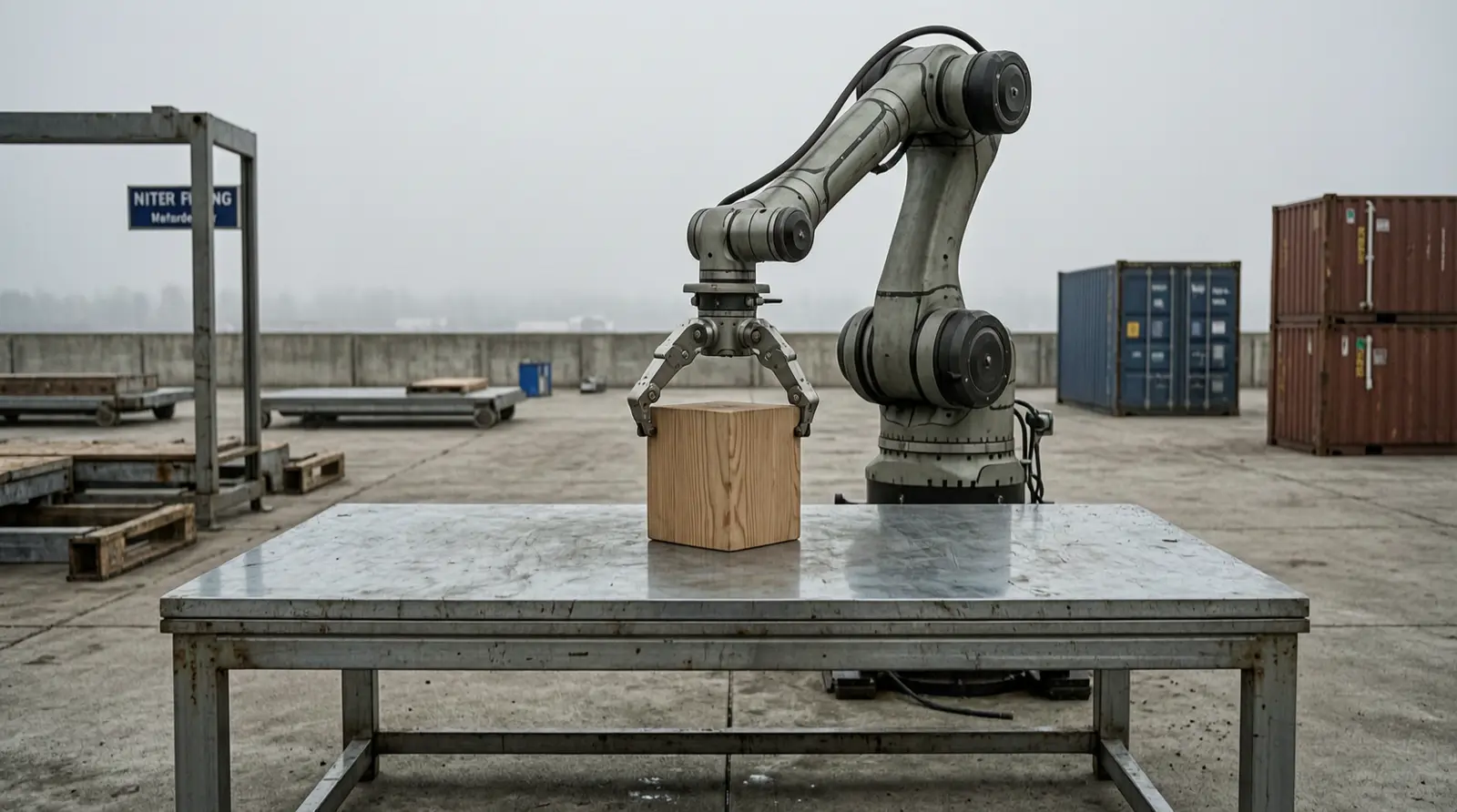
The Hong Kong Productivity Council says it has opened an experimental hub for embodied artificial intelligence. Several research items are being discussed alongside the opening, but none is explicitly connected to the hub. Commercial traction remains unproven.
On Thursday, the Hong Kong Productivity Council said it opened Hong Kong’s first experimental hub for embodied artificial intelligence. The council says the facility is an experimental hub, a phrase that suggests a place for trials rather than a finished product. The launch included participation by several parties, according to the council, but the council has not detailed which partners will run experiments, supply hardware or pay for the work.
A public floor for physical models
If the hub works as a shared test floor, it could give smaller teams access to space and equipment they would not build alone, and it could give public bodies a way to watch failures close up. That would lower the cost of collecting contact-rich experience, the kind of data that manipulation research keeps demanding. That is a mechanism, not a result. The council’s statement says the hub opened; it does not yet say how often outside teams will get access, under what rules, or with what liability when a robot breaks a fixture or injures a person.
The phrase “first experimental hub” also needs caution. The council says this is Hong Kong’s first such hub, but the statement does not rule out existing university labs, private facilities or other test environments that may already serve similar purposes. The label may be about public access, government backing or a particular format, but those distinctions are not spelled out.
The hub’s value will be determined by access, not announcements.
Papers without a clear address
Around the hub announcement, several research items are being discussed as signs of the field’s direction. LIBERO-PeRM is a benchmark for personalized robotic manipulation. CoDA addresses the co-evolution of data engines and action policies.
Three other descriptions are less settled. Supporters of T2-z say it performs test-time optimization of environment latents for robotic world models; sceptics say the original arXiv paper is needed before that can be treated as settled. Supporters of GeoState say it learns view-decoupled geometry states for 3D world modeling; sceptics say the paper must be seen first. Supporters of DSP say it is a framework in which a robot learns a play policy to collect contact-rich experience for dexterous manipulation; sceptics say the primary paper has not been provided.
None of these descriptions explicitly ties the work to the new Hong Kong hub. The research may be relevant, but the information at hand does not show a connection. A reader who glances at the list could infer a tight ecosystem; the safer reading is that these are separate strands of embodied-AI work circulating near the same moment.
The commercial test is still missing
The more important test is commercial. A hub becomes infrastructure when third parties use it repeatedly, not when it opens. The council says several parties participated in the launch, but no partners, projects, budgets or timelines are named in the statement. Without those, the hub is a public room with a purpose, not yet a pipeline.
The research themes point to where the technical pressure is. Manipulation benchmarks, co-evolving data and policies, world models, geometry states and play-based data collection all aim at robots that can cope with messy physical contact. A testbed could help turn such methods into repeatable trials. It could also expose which approaches fail under ordinary constraints: lighting, clutter, safety stops, maintenance and human interruption.
The hub’s value will be determined by access, not announcements. The open question is whether Hong Kong’s new facility will become a shared floor where outside teams can break, fix and improve robots — or remain a launch-day setting with no public record of what was learned.
- 01The Hong Kong Productivity Council says it opened Hong Kong’s first experimental embodied-AI hub.
- 02The council says the hub opened on Thursday and that several parties took part in the launch.
- 03LIBERO-PeRM is a benchmark for personalized robotic manipulation.
- 04CoDA addresses the co-evolution of data engines and action policies.
- 05The research items named alongside the hub are not explicitly tied to it.
Interpretation, not reporting. The facts above carry their tiers; this is one correspondent’s reading of them.
Public testbeds matter only when they become ordinary infrastructure, not launch-day theatre. I see three layers here. The first is real: the Hong Kong Productivity Council says an experimental embodied-AI hub opened on Thursday, with several parties participating. The second is fuzzy: LIBERO-PeRM, CoDA, T2-z, GeoState and DSP are research descriptions, and none is explicitly tied to the hub. The third is commercial: traction is not established. If partner names, access rules and testing schedules appear soon, the hub could become a useful shared floor for robotics teams. If not, it risks being a venue with a press release and no pipeline. What would change my mind is simple evidence of repeated use by outside teams, especially on manipulation and world-model work that needs physical data. Until then, the interesting part is not the opening; it is whether the hub can convert public support into reliable experiments.
— Ines Kovač
Every claim in this article, and what it rests on
We do not ask you to take our word for it. Each statement below carries its tier and its sources. Where sources disagree, you get both accounts and what would settle it.
LIBERO-PeRM is a benchmark for personalized robotic manipulation.
CoDA addresses the co-evolution of data engines and action policies.
T2-z performs test-time optimization of environment latents for robotic world models.
GeoState learns view-decoupled geometry states for 3D world modeling.
DSP is a framework in which a robot learns a play policy to collect contact-rich experience for dexterous manipulation.
The Hong Kong Productivity Council opened Hong Kong’s first experimental hub for embodied artificial intelligence.
The embodied-AI hub opened on Thursday.
The hub launch included participation by several parties.
The case against this story
Written by an adversarial reviewer, not the correspondent
The story pairs a Hong Kong government announcement about an embodied-AI hub with a list of specific research papers and frameworks, but no claim explicitly ties these papers to the hub or its participants. A reader could easily infer that LIBERO-PeRM, T2-z, CoDA, GeoState, and DSP are research outputs associated with the hub, when they may be entirely unrelated work from other institutions. The claim that this is Hong Kong's 'first' experimental hub for embodied AI is also unverifiable from the information given—other labs or universities in Hong Kong may already host similar facilities without the 'experimental hub' label. The overall picture suggests a major, research-backed initiative when the verifiable core may be a government body opening a facility with unspecified partners.
Who benefits from this framing: The Hong Kong Productivity Council benefits from the appearance of launching a significant, research-backed embodied-AI initiative rather than a government facility opening. Hong Kong's innovation and technology sector more broadly benefits from a narrative of local leadership in embodied AI, which can attract funding, talent, and partnerships. If readers infer that the named research papers are connected to the hub, the researchers behind those papers also gain unearned institutional prestige by association with a high-profile government launch.
Report an error in this article
Subscriptions open at launch
Future Systems Review will be a paid publication. Reading is free while we build the archive — leave an address and we will write to you once, when subscriptions open.