
Three papers stretch AI from humanoid control to potato leaves, with thin proof
The signal is how domain-specific AI is being packaged before results are public.
 Ines KovačFrontier models and AI agents
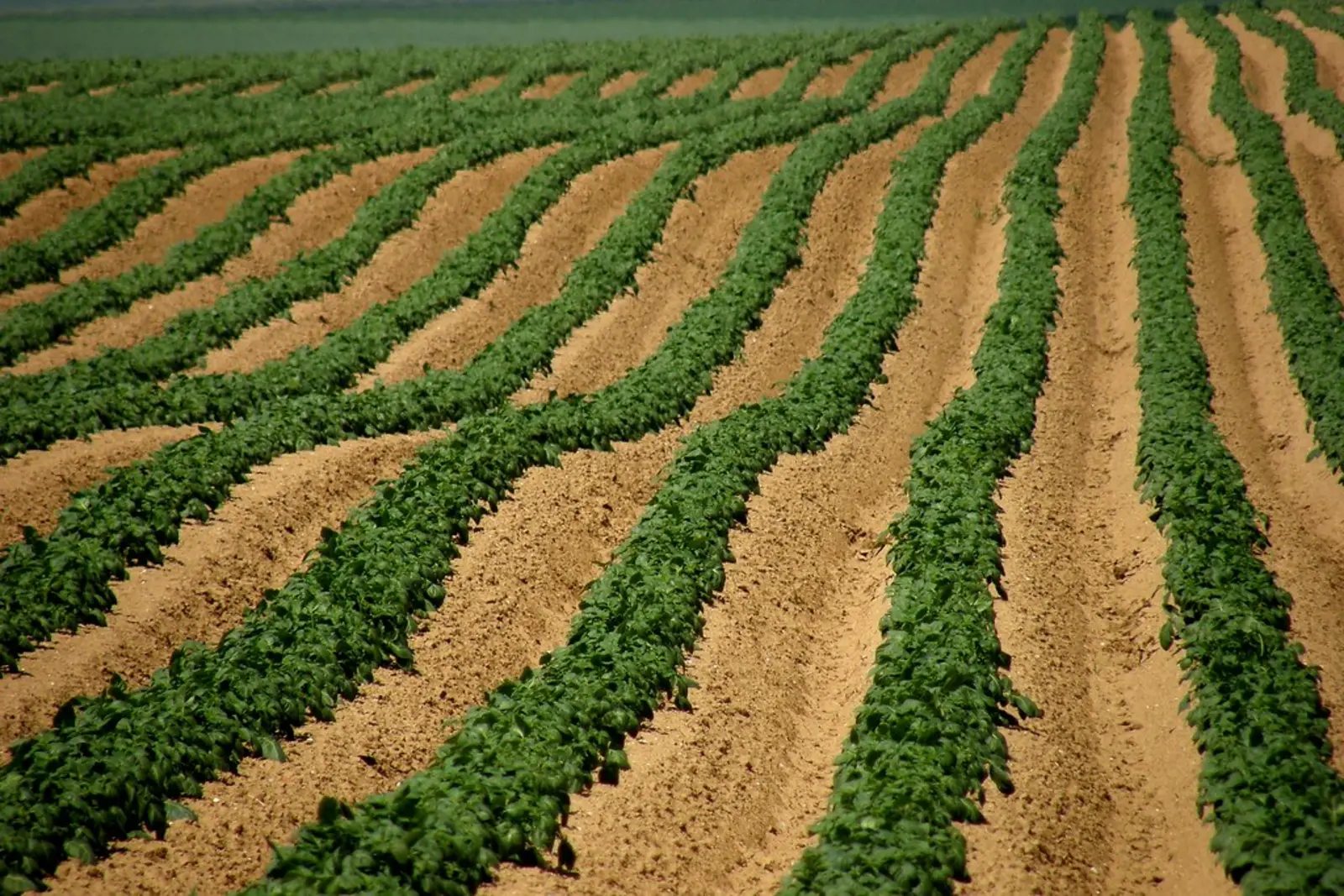
Three arXiv postings touch humanoid policy weights, steady-PDE surrogates, and potato leaf disease detection. Their abstracts offer broad statements rather than deployment evidence. The useful question is what, if anything, is being made reliably better.
Three arXiv postings arrived with identifiers that read like a catalog of applied AI: 2610.20606v1, 2610.20585v1, and 2610.20544v1. The first is a cs.AI paper on humanoid policies. The second is a cs.LG paper on steady partial differential equation surrogates. The third is another cs.LG paper on potato plant leaf disease detection.
The titles do the sorting. *Modeling and Understanding Neural Weights of Humanoid Policies with Diffusion* points at robot control and the internal weights of learned policies. *Learnable Hodge-Laplacian Driven Mixture of Experts for Steady-PDE Surrogates on Coarse Unstructured Meshes* points at physics simulation on irregular grids. *Detection of Potato Plant Leaf Diseases using Convolutional Neural Networks* points at agriculture and image classification.
Three identifiers, three domains
The common thread is not a method. It is a pattern in which model structure follows the shape of the problem. Humanoid control needs policies that can be understood well enough to act in the physical world. PDE surrogates need to respect geometry and boundary conditions on meshes that are coarse and unstructured. Leaf-disease detection needs a convolutional network trained on visual symptoms rather than a general chat interface.
That is the mechanism behind the domain-specific pitch. If the architecture encodes the problem’s constraints, the model may need less brute-force data and may fail in fewer surprising ways. But the papers listed here do not, on their face, provide a deployment record. They provide titles, categories, identifiers, and abstract language.
The gap between these papers and an investable thesis is the gap between posting and proof.
What the abstracts actually say
The humanoid-policy paper states that recent advances in robot learning have driven rapid progress in humanoid control, enabling increasingly agile behaviors in the real world. A skeptical reader can treat that as a fair description of the field’s direction, or as introductory boilerplate that precedes the actual contribution. Both readings are available from the information at hand.
The PDE-surrogate paper concerns steady partial differential equation surrogate models on coarse unstructured meshes. One reading is that this simply states the paper’s subject. Another is that it repeats the title without showing performance. The open question is whether the proposed mixture-of-experts and Hodge-Laplacian machinery improves accuracy, speed, stability, or cost relative to existing surrogates, and on which problems.
The potato-disease paper states that potato is an important food-security crop in Ethiopia and that its production is affected by foliar diseases, particularly early blight and late blight. This is background that agronomists would recognize. It becomes a technology story only if the CNN detection system works under field conditions, on the relevant varieties, at a cost a farmer or extension service would pay.
Where the proof stops
The gap between these papers and an investable thesis is the gap between posting and proof. An arXiv identifier shows that a manuscript exists. A title shows what the authors intended to study. An abstract can state a motivation. None of that establishes reliability on an ordinary Tuesday: whether a humanoid policy recovers from a shove, whether a surrogate remains stable on a messy mesh, or whether a leaf-disease model distinguishes early blight from nutrient stress in bad light.
For founders and CTOs, the useful filter is boring. Ask what was measured, against what baseline, on what data, and whether the test includes the inconvenient parts of the domain. In physics, that means boundary conditions and generalization. In agriculture, that means labels, disease pressure, and deployment. In robotics, that means hardware, safety, and repeated trials.
The open question is not whether applied AI is moving into physics, plants, and humanoid control. The titles show that it is. The question is whether domain-specific structure is producing measurable advantages, or merely more precise labels for old problems.
- 01Three arXiv identifiers are 2610.20606v1, 2610.20585v1 and 2610.20544v1.
- 02The papers are listed in cs.AI or cs.LG.
- 03The humanoid paper states that robot learning has driven progress in real-world humanoid control.
- 04The potato paper states that early blight and late blight affect potato production in Ethiopia.
Interpretation, not reporting. The facts above carry their tiers; this is one correspondent’s reading of them.
The interesting part is not that three papers touch robots, physics and crops; it is that all three are being framed through structure rather than results. I can see why this story travels. Domain-specific architectures promise constraints, fewer surprises, and a route from abstract language to ordinary use. But the evidence here stops at titles and abstract language. The humanoid paper’s sentence about agile behavior could be true and still tell me nothing about reliability. The PDE surrogate’s mesh language could be exact and still tell me nothing about speed or error. The potato paper’s Ethiopia background could be accurate and still tell me nothing about detection performance. If later work shows baselines, failure cases, and costs, the domain-specific thesis gets stronger. If it keeps producing broad motivations, the thesis is just branding. I would watch for one thing: whether these models are evaluated against the messy parts of their domains, not just the clean ones.
— Ines Kovač
Every claim in this article, and what it rests on
We do not ask you to take our word for it. Each statement below carries its tier and its sources. Where sources disagree, you get both accounts and what would settle it.
An arXiv cs.AI paper titled "Modeling and Understanding Neural Weights of Humanoid Policies with Diffusion" is available at arXiv identifier 2610.20606v1.
An arXiv cs.LG paper titled "Learnable Hodge-Laplacian Driven Mixture of Experts for Steady-PDE Surrogates on Coarse Unstructured Meshes" is available at arXiv identifier 2610.20585v1.
An arXiv cs.LG paper titled "Detection of Potato Plant Leaf Diseases using Convolutional Neural Networks" is available at arXiv identifier 2610.20544v1.
The humanoid-policy paper states that recent advances in robot learning have driven rapid progress in humanoid control, enabling increasingly agile behaviors in the real world.
The PDE-surrogate paper concerns steady partial differential equation surrogate models on coarse unstructured meshes.
The potato-disease paper states that potato is an important food-security crop in Ethiopia and that its production is affected by foliar diseases, particularly early blight and late blight.
The case against this story
Written by an adversarial reviewer, not the correspondent
The strongest case against this story is that it bundles three completely unrelated arXiv papers — one on humanoid robot policies, one on PDE computational surrogates, and one on potato leaf disease detection — as if they form a coherent picture worth reporting together. They share no common theme, method, or domain. Worse, the content claims about what each paper states are either generic introductory boilerplate (the humanoid-policy paper's line about recent advances in robot learning), a tautological restatement of the title (the PDE-surrogate paper's description), or well-known agricultural background facts (the potato-disease paper's mention of early blight and late blight in Ethiopia). None of the content claims report a specific, novel, or surprising finding. Without access to the actual papers, the arXiv identifiers, titles, and content descriptions cannot be independently verified from the information given and could be inaccurate or fabricated. A reader who takes these claims at face value gains no genuine insight because the substantive content is either trivially true or unverifiable.
Who benefits from this framing: The authors of the three described papers benefit from increased visibility and potential citations if readers believe these are significant contributions worth attention. If any of the papers, arXiv identifiers, or content descriptions are fabricated or inaccurate, whoever created the false claims benefits from having their fabrications appear legitimate and well-sourced. Additionally, anyone curating or promoting these papers as a unified 'story' benefits from the appearance of comprehensive coverage of arXiv output, even when the selected papers are unrelated and the content claims add little beyond titles and common knowledge.
Report an error in this article
Subscriptions open at launch
Future Systems Review will be a paid publication. Reading is free while we build the archive — leave an address and we will write to you once, when subscriptions open.